
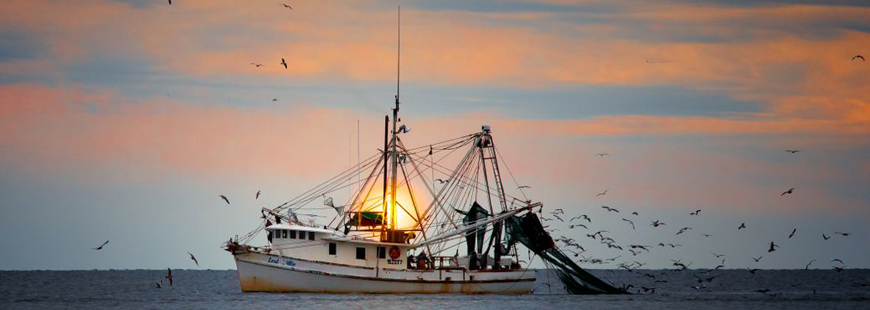
Top photo: Fishing boat off the coast of North Carolina, by Mark Stebniki via Pexels
Losing Our Competitive Edge: NOAA’s Priorities for American Seafood
Why science-based management and conservation are central to American seafood “dominance”
The Trump administration has recently declared a goal to increase American dominance in the global seafood market. The United States already has some of the world’s most sustainably managed fisheries, and American fishermen should be and are well positioned to compete in global seafood markets.
But true seafood competitiveness depends on sustaining the healthy fish stocks and productive ocean ecosystems that make fishing possible. If the pursuit of “dominance” comes at the expense of the science-based conservation measures that rebuilt American fisheries, we risk repeating the mistakes of the past, when fish stocks crashed, coastal communities suffered, and fishermen faced emergency closures with not much left to catch.
Earlier this month, the administration began outlining its approach to achieving this goal. NOAA Fisheries Assistant Administrator Eugenio Piñeiro Soler released a list of agency actions to support President Trump’s Executive Order on Restoring American Seafood Competitiveness. The list ranges widely, but it focuses on areas that include:
- How fishermen interact with endangered species, marine mammals, and other wildlife
- Catch data collection and assessment
- Marine monuments
- National Standards under the Magnuson-Stevens’ Act
- Disaster relief and other financial programs
- Seafood import monitoring
We still have much to learn about how the agency plans to move forward with the priorities it has laid out. But taken as a whole, the agency’s list of priorities to “restore American seafood competitiveness” conflicts with historic conservation lessons we’ve learned over the past fifty years. In that time, we’ve saved many American fisheries and protected the ocean habitats that support them. The administration’s priorities, however, risk reversing the painstaking progress we’ve made so far.
As fisheries policy expert and lifelong angler Charles Witek writes:
Together, [the proposed reforms] create a near-perfect wish list for commercial and recreational fishing industries focused solely on short-term profit, that will remove protections for endangered and other protected species, while potentially diluting the quality of fisheries science and making fish stocks more vulnerable to overfishing and habitat loss.
Assistant Administrator Piñeiro Soler clearly states the agency’s rationale: “In every harbor and at every meeting, the message has been consistent: American fishermen just want to fish, and they need their government to clear the bureaucratic barriers standing in their way.” What this administration clearly doesn’t understand is that the America fishing industry has already experienced a time of unregulated fishing. The results? Disastrous to U.S. fisheries, fishing jobs and businesses, and to the long-term survival of the fishing industry.
Our country has a supported and promoted American seafood competitiveness for many years. In 1976, the Magnuson Fishery Conservation and Management Act (MSA) was signed into law to promote the U.S. fishing industry by establishing an exclusive economic zone that prohibited foreign vessels in U.S. waters. With foreign fishing fleets gone, American fishermen gained a new monopoly on the local seafood market.
Yet the heyday of American fishing created by this law was short-lived. Fishermen faced a greater challenge: managing fish populations so fisheries could remain productive over the long term. Though the MSA included seven national standards for managing U.S. fisheries, including National Standard 1 to prevent overfishing, the law did not have enough regulatory teeth to enforce the sustainable fishing practices and habitat protections that allowed fisheries to stay productive. Fish stocks began plummeting throughout the 1980s, and many stocks were nearing depletion by the 1990s. Congress ultimately responded by strengthening the law with additional conservation measures designed to rebuild fish populations and sustain productive fisheries.
In fact, it was Republican Senator Ted Stevens from Alaska, the state with the greatest number of commercial fishermen and seafood workers in the U.S. – and the largest volume of seafood caught in this country – who twice championed changing the law to mandate stronger conservation measures to protect the long-term health of ocean ecosystems and fisheries. Congress passed mandatory annual catch limits (ACLs) based on the best available science, along with accountability measures (AMs) for fisheries that exceed those catch limits. Fisheries management widened its focus beyond fish stocks and began working to minimize harms to fish habitats and ocean ecosystems, because fish populations need both to thrive.
Under the MSA, the regulations that regional fishery management councils set and enforce today are based on the best science available. They also rely on conservation measures developed through years of learning what has and has not worked in fisheries and ocean management. These regulations have brought American fisheries and American fishing back from the brink.
The Trump administration appears, however, to mistakenly equate creating greater economic prosperity with eliminating commonsense fisheries management measures.
Decades of history prove that the greatest economic support you can give fishermen and fishing communities is a well-managed resource. For both commercial and recreational fishermen, the foundation for economic prosperity and job security comes from having an abundant and dependable catch. We cannot achieve this state without science-based fisheries management that prioritizes long-term conservation over unsustainable and unfettered resource extraction. If you want to catch fish tomorrow, you have to leave enough in the water today.
Important as it is, more than just the future of the American seafood industry is at stake. As Meredith Moore, senior director of Fish Conservation at Ocean Conservancy stated, “Weakening the standards and science that protect fish stocks is not the path to strong fishing communities and continued opportunity for future generations. At risk are not only the species that power our seafood economy, but the whales, turtles, fish and corals that make up a healthy and productive ocean.” Responsible management of ocean ecosystems supports tourism, diving, and a myriad of other industries that also contribute to America’s ocean economy.
We CAN make American seafood businesses more competitive now and in the future. We just have to keep in place the proven management tools that create more productive fisheries. The lessons of our past are clear: long-term economic prosperity depends on science-based management and conservation.
As NOAA moves forward with its reform agenda, we must make sure that efforts to strengthen American seafood competitiveness build on the lessons learned from the past, not on undermining them. The future of American fishing and the health of our oceans depend on finding the right balance.