
On July 24, 2026, the recreational fishing tackle industry’s largest trade organization, the American Sportfishing Association (ASA), issued a press release which declared that “Sportfishing Groups Support Rep. Austin Scott’s South Atlantic Red Snapper Fair Access Act.”
The press release went on to note,
In recent years, recreational anglers in the South Atlantic have been limited to extremely short red snapper seasons, including one- and two-day openings, while commercial harvest has been open for substantially longer periods lasting weeks or months. The South Atlantic Red Snapper Fair Access Act establishes a straightforward principle: if federal management prohibits the public from recreational harvest of South Atlantic red snapper in federal waters, then commercial harvest and sale of red snapper from federal waters should also be prohibited during that same closure.
On the surface, that might seem reasonable, but anyone aware of the facts underlying South Atlantic red snapper management, and of recent events surrounding that fishery, will quickly realize that the legislation in question has nothing at all to do with fairness, nor with any rational approach to managing the red snapper fishery.
South Atlantic red snapper pose one of the most difficult management problems on the East Coast. A comprehensive stock assessment, released in 2008, found that overfishing had been occurring, and that the stock had been overfished, since the 1960s; at the time of that assessment, spawning stock biomass was believed to be at just 3% of its target level, while the fishing mortality rate exceeded its target by nearly 700%. A second assessment, released two years later and using a different statistical model, came to somewhat less dire conclusions, finding that spawning stock biomass was at about 9% of its target level, and that the fishing mortality rate exceeded its target by a little over 300%.
Those findings resulted in very restrictive regulations being imposed on commercial and recreational fishermen. The fishery was completely shut down in 2011; while some harvest was allowed in subsequent years, the recreational season remained extremely short, ranging anywhere between one and nine days.
The South Atlantic red snapper stock responded to the management measures, and is no longer overfished, nor is it experiencing overfishing. However, anglers continue to fish for other species during the closed red snapper season, in waters where red snapper are present, resulting in very high red snapper bycatch in the recreational snapper-grouper fishery. While that bycatch is, for the most part, returned to the water alive, many of the fish later succumb to barotrauma-related injuries, caused by the sharp change in water pressure that a fish experiences after it is hooked in deep water and then cranked to the surface.
A study published in the May 2026 edition of the journal Fisheries Research, which studied red snapper release mortality off northeastern Florida, found that 46.8% of hooked red snapper that were released at the surface of the ocean died within six hours of release; even when a descending device was used to help released snapper get back to the bottom, 29% of the red snapper died within 48 hours of release.
Such high rates of discard mortality in recreationally released South Atlantic red snapper, which occur throughout the entire year, lead to a massive waste of the red snapper resource, with anglers returning hundreds of thousands of fish to the water to die.
On June 11, 2025, the National Marine Fisheries Service (NMFS) issued a final rule implementing Amendment 59 to the Fishery Management Plan for the Snapper-Grouper Fishery in the South Atlantic (Amendment 59). Comments accompanying the rule noted that
Most of the red snapper fishing mortality is attributed to dead discards in the recreational sector. The recreational sector consists of both private recreational anglers and charter vessels and headboats (for-hire). Recreational fishermen discard red snapper during both the directed red snapper recreational open fishing season and during the closed recreational season while fishers are targeting snapper-grouper species that co-occur with red snapper…approximately 98 percent of all red snapper discard mortalities during 2021-2023 were from the recreational sector. [emphasis added]
As a result of that extremely high level of dead recreational discards, far more red snapper are killed and wasted by anglers than are harvested by either commercial or recreational fishermen. Of the total annual catch limit (ACL) of 509,000 red snapper, 475,000, a startling 93.3% of the entire ACL, are set aside for dead discards. Of the remaining 34,000 fish, 22,797 are allocated to the recreational sector, with the remainder allocated to the commercial fishery.
Of all the red snapper caught each year, by both commercial and recreational fishermen, fewer than 7% ultimately go to feed people; the remainder are dumped back into the water to die, and end up feeding the sharks and the crabs.
Because the great majority of that waste occurs when the recreational red snapper season is closed, the only way to meaningfully reduce dead discards while increasing landings is to institute a seasonal closure on all fishing for snapper-grouper species. NMFS attempted to do that, issuing proposed regulations on January 14, 2025, which would have shut down a section of ocean off northeast Florida to all snapper-grouper fishing during the months of December, January, and February.
However, the ASA, along with other members of the recreational fishing industry and various “anglers’ rights” groups such as the Coastal Conservation Association, immediately opposed the closure, apparently believing that 475,000 wasted red snapper was a reasonably price to pay for keeping the season for other snapper-grouper species open. After the new presidential administration entered the White House, it proved sympathetic to industry concerns, and removed the proposed closure from the final version of Amendment 59.
As an alternative, the recreational industry and allied organizations urged NMFS and state fisheries managers in Florida, Georgia, and the Carolinas to collaborate on so-called exempted fishing permits which, under the guise of improving recreational catch and landings data, would have extended the recreational red snapper season from two days to 39 days off Florida and 62 days off the other three states.
The exempted fishing permits, which NMFS issued on May 1, 2026, would do little or nothing to reduce anglers’ dead discards; instead, by setting aside certain provisions of the Magnuson-Stevens Fishery Conservation and Management Act (Magnuson-Stevens), including those prohibiting overfishing and requiring fishermen to adhere to annual catch limits, they would have allowed recreational fishermen to overfish the South Atlantic red snapper stock with impunity, while the commercial sector would still be constrained to its scant share of the fishery.
That doesn’t seem particularly fair.
One marine conservation group, the Ocean Conservancy, observed that the longer season could result in anglers landing as many as 485,000 South Atlantic red snapper, about 20 times what would be allowed if the ACL remained in place.
Members of the commercial fishing industry, afraid that such gross overfishing would threaten their ability to harvest their allocated share of the red snapper stock, challenged the exempted fishing permits in federal court, arguing that their issuance violated key provisions of Magnuson-Stevens, including its requirement that “Conservation and management measures shall prevent overfishing.” A federal judge agreed, and issued a temporary injunction preventing anglers from fishing pursuant to the exempted fishing permits.
In his decision, the judge stated that
Traditional tools of statutory analysis show that any [exempted fishing permits] the NMFS issues must comply with the [Magnuson-Stevens Act]…
Therefore, at a minimum, each EFP the agency issues—including data collection projects—must ‘address’ (i.e., ‘to give attention to or deal with a matter or problem’) the ‘needs’ (i.e., necessary dut[ies] or obligation[s]’) Congress identified within Chapter 38 [of Magnuson-Stevens] several of which emphasize the need to prevent overfishing…
while the Court agrees with the Government that Congress, through section 1867(d) [of Magnuson-Stevens], authorized the NMFS to ‘create an expedited, uniform, and regionally-based process to promote issuance, when practicable, of experimental fishing permits,’ the Court does not find that Congress gave the Government unbridled discretion to circumvent MSA and the fishery management plan framework through the EFP process…As Amicus Curiae aptly observes, ‘nothing in [Section 1867(b)]…gives the [NMFS] general authority to exempt fishing activities from any legal requirements…let alone indicate[s] that Congress meant for [EFPs] to become a vehicle to deregulate fisheries’…As explained above, EFPs must ‘address’ the ‘needs’ identified under the MSA—not provide an escape hatch from them. Such needs include the overarching requirement that fisheries be managed to prevent and end overfishing.
The various recreational fishing organizations that championed the exempted fishing permits in the hopes of gaining longer recreational red snapper seasons waxed indignant when the court’s decision was released, but have since showed little interest in continuing litigation.
When viewed in that historical context, the true nature of the South Atlantic Red Snapper Fair Access Act (Act) becomes clear. Far from being an effort to strike some sort of equitable balance between the recreational and commercial red snapper fisheries, the bill is really a petty, almost childish, effort to gain some sort of revenge against the commercial red snapper fishermen for prevailing in their effort to invalidate the exempted fishing permits.
And what makes it worse is that the proponents of the Act aren’t even trying to hide their motivations. The ASA press release clearly says,
This summer, recreational anglers in Florida, Georgia, South Carolina, and North Carolina were set to receive expanded red snapper access through NOAA-approved, state-led Exempted Fishing Permit pilot programs that would have expanded fishing opportunity through advanced recreational data collection and improved management, but those seasons were halted by a preliminary injunction resulting from a lawsuit filed by commercial fishermen…
“South Atlantic red snapper is an important public resource, and access to that resource should be managed fairly,” said Rep. Scott. “If commercial fishing interests are concerned enough about the current condition of the red snapper fishery to support shutting down recreational access, then commercial sale and harvest of the same stock, from federal waters, should be limited during the same closure. This is not about attacking commercial fishing. It is about making sure that conservation burdens are being shared fairly.”
And the Act itself includes findings that
(1) South Atlantic red snapper is a healthy public fishery resource that supports recreational anglers, for-hire operators, coastal communities, fishing tackle retailers, marinas, lodging providers, and other businesses throughout the South Atlantic region.
(2) In recent years, recreational harvest of South Atlantic red snapper in Federal waters has been limited to extremely short seasons, including one- and two-day seasons, despite historic abundance and strong public demand for access to the fishery.
(3) Conversely, commercial harvest of South Atlantic red snapper in Federal waters has remained longer for substantially longer periods, including commercial seasons that have lasted for weeks or months in recent years.
(4) Leading up to the 2026 recreational fishing season, the States of Florida, Georgia, South Carolina, and North Carolina, working with the National Marine Fisheries Service, developed and received approval for State-led exempted fishing permit pilot programs designed to improve recreational fisheries data collection, test State management strategies, reduce uncertainty, and provide more reasonable recreational access to South Atlantic red snapper.
(5) Those State-led pilot programs were halted by a preliminary injunction issued by the United States District Court for the District of Columbia, blocking the approved 2026 pilot seasons for the States of Florida, Georgia, South Carolina, and North Carolina, including Florida’s season just hours before it was scheduled to begin.
(6) While anglers continue to sit at the dock awaiting a management system that allows reasonable access to a healthy public fishery resource, conservation burdens and access restrictions should be shared fairly across sectors.
It’s a remarkable set of findings, not only for what it says, but also for what it doesn’t say. For example, it notes that the “State-led pilot programs” were “halted by a preliminary injunction,” but failed to explain that the exempted fishery permits were enjoined because issuance of those permits was patently illegal and in clear violation of the provisions of Magnuson-Stevens. Instead, the findings almost suggest that the fishermen were victims of a court’s arbitrary and capricious whim.
The Act also exhibits a very warped concept of “fairness.”
The Act, as well as the ASA and other recreational fisheries interests, tie “fairness” solely to the comparative lengths of the recreational and commercial fishing seasons, when in reality, it is not the length of the season, but how many fish are removed from the population, which is the primary management concern.
From that standpoint, the deck is stacked against the commercial fishery, and in favor of anglers, from the start, as NMFS regulations allocate 71.93% of what remains of the ACL, after dead discards are subtracted, to the recreational fishery, and the remainder to commercial fishermen.
In 2025, recreational landings were limited to 22,797 fish, which were expected to weigh about 263,815 pounds, compared to the 102,951 pounds allocated to the commercial sector, and anglers caught those 22,797 fish very quickly. Over the course of just two days, recreational fishermen didn’t just land 22,797 red snapper, they landed 36,482, and overage that probably exceeded all of the South Atlantic red snapper landed by the commercial fleet over the course of the year.
Yet, despite significantly exceeding their ACL, anglers are calling their two-day season “unfair.”
Even that doesn’t tell the whole story, because along with the fish that they landed were the fish that they returned to the water to die. About 98% of the 475,000 dead discards are attributable to the recreational sector, and if those 465,500 dead discards are added to the 36,482 red snapper that anglers actually harvested in 2025, one ends up with nearly 502,000 red snapper killed by recreational fishermen, compared to the approximately 20,703 red snapper (consisting of a harvest of roughly 11,203 fish, assuming an average weight of 9.19 pounds, plus 9,500 dead discards).
Still, the recreational fishery is complaining that that is “unfair”—to them.
In 2025, recreational fishermen were responsible for about 96% of all of the fishing mortality of South Atlantic red snapper. Yet they are still claiming that they are being denied reasonable access to the red snapper resource, and are thus seeking “fair access” by outlawing commercial fishing when the recreational season is closed.
It is an incredible claim, that has nothing to do with fairness, and everything to do with a group of sore losers, who unfortunately presume to speak for the entire recreational sector, trying to wreak some sort of vengeance against the commercial red snapper fleet, simply because the commercial fishermen chose not to allow NMFS to illegally issue exempted fishing permits that could have easily resulted in harm to both the red snapper stock and to the fishermen’s livelihoods.
The Act supports the recreational spokesmen’s malignant claim, and in doing so, promotes the worst sort of inequity.
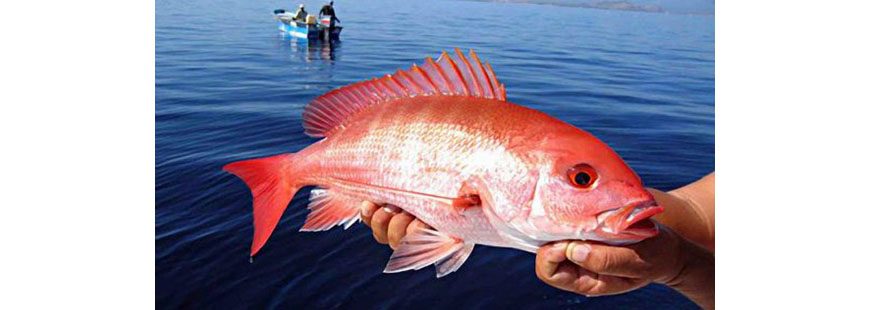
Top photo via NOAA