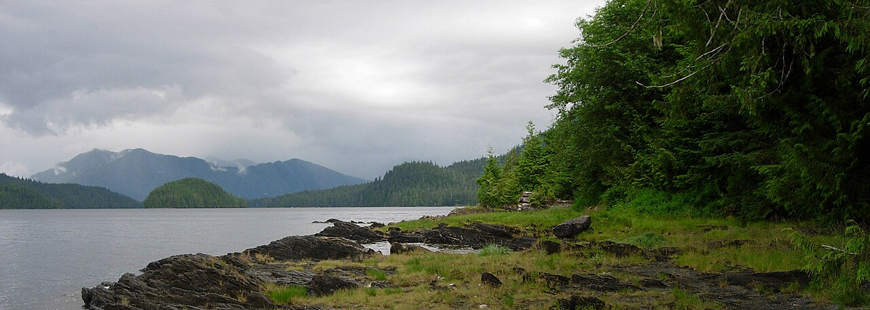
Trees are often not part of the conversation when talking about fishery management. In Southeast Alaska, however, our region’s fisheries depend on and interconnect with our region’s forests, specifically the Tongass National Forest, the world’s largest coastal temperate rainforest.
The future of the Tongass and Southeast Alaska’s fisheries hang in limbo as the U.S. Department of Agriculture (USDA) moves forward to rescind Roadless Rule protections for the Tongass’ old-growth forests, while at the same time advancing a new management plan that boosts logging activity throughout the Tongass. Doing so will jeopardize Southeast Alaska’s status as one of the most productive and valuable seafood regions in the country. It also conflicts with the Trump administration’s own Executive Order 14276 to increase the competitiveness of America’s seafood industry, including its commitment to increase investment in the seafood industry through the USDA’s new Office of Seafood.
If we intend to restore competitiveness and ensure long-term sustainability of our country’s fishing industry, then we must maintain the intact ecosystems that our wild fish populations depend on, as well as the invaluable services those ecosystems provide.
The Tongass National Forest is not just any forest; it’s a “fish forest,” meaning the rivers and streams of the Tongass are the birthplace of close to 50 million salmon every year, which is 30% of Alaska’s wild salmon harvest. Many of those salmon are coho and pink salmon, which depend on the Tongass’s diverse portfolio of fish habitat.
The Tongass’s salmon are central to Southeast Alaska’s way of life, culture, and economy. Consider this:
- Southeast’s commercial fisheries support more full-time fishery workers than any other region in the Gulf of Alaska.
- This region is home to one-third of Alaska’s fishing fleet, with residents owning 2,655 fishing vessels.
- Commercial fishing and seafood processing comprise one of the two top private sector employers in the Tongass.
- Commercial fishing supports by far the largest number of private business owners. In recent years the commercial fishing sector was responsible for 15% of regional employment and contributed more than $800 million to Southeast Alaska’s economy.
Meanwhile, the timber industry accounts for less than one percent of regional jobs and costs U.S. taxpayers $20.5 – $33.8 million annually. And yet despite these facts and strong local opposition, the USDA plans to unleash logging throughout the Tongass and directly harm the ecosystems that sustain our region’s biggest industries.
In 2025, the USDA announced that it would repeal Roadless Rule protections for the Tongass. First adopted by the USDA in 2001, the Roadless Rule prohibits the construction of new roads and most timber harvesting in inventoried “roadless” areas. In Southeast Alaska, the Roadless Rule protects more than 9 million acres of the Tongass National Forest from clearcutting and timber road construction. We expect to see a draft environmental impact statement from the USDA in the coming weeks, and we will be filing comments urging the USDA to keep Roadless Rule protections in place and explaining why the proposed rescission will be an economic disaster for private sector economic activity in the region.
Concurrently, the USDA is revising its Tongass Land Management Plan, and in the preliminary draft content released earlier this spring, the Forest Service proposed to increase timber harvest in the Tongass by 56%. (The U.S. Forest Service has a management plan for every national forest; it last revised the Tongass Forest Plan in 1997, with two amendments in 2008 and 2016.) In response to pressure from Alaska’s Governor Mike Dunleavy, the Forest Service is moving at break-neck speed to wrap up its Tongass plan revision process in 2027. It has already blown through several public comment periods this year and hosted a series of community workshops around the region that did not allow for any public testimony. Although Alaska’s fishermen are the leading economic sector that depends on Tongass resources, the agency has largely cut them out of the plan revision process so far, with little mention or consideration of Southeast Alaska’s fisheries in the preliminary draft content.
In response, the Alaska Longline Fishermen’s Association along with The Boat Company have put forward a proposed “Fishermen’s Alternative” for the Tongass plan revision. The core principles of the “Fishermen’s Alternative” include:
- Protect productive fresh and saltwater habitat, with a focus on salmon. Managing for salmon meets multiple social and economic sustainability goals by maintaining diverse ecosystems and the services they provide.
- Incorporate the Northwest Forest Plan’s Aquatic Conservation Strategy, tailored for the Tongass. The strategy relies on an ecosystem approach that (1) protects watersheds that currently have healthy habitat and (2) halts further decline in watersheds that have some level of habitat degradation. The primary objective is to maintain and/or restore watershed distribution, diversity and complexity.
- Reduce the acreage designated as suitable timberlands. Lands designated as suitable timberlands should be available only to mills fully utilizing timber for products processed locally.
- Require in-region processing of Tongass timber. The Tongass is the only U.S. National Forest allowed to export round logs. Local processing and local use create jobs and are the right scale for the industry.
In a nutshell: Southeast Alaska’s fishermen want the Forest Service to adopt a management plan for the Tongass that puts fish first and prioritizes protection of fish habitat from activities well-proven to cause harm (i.e., logging). Protecting forests for fish preserves a basketful of ecosystem services that make the Fishermen’s Alternative the true community alternative. Doing so will ensure a stable future for Southeast Alaska’s rural fishing communities and help achieve the administration’s goals of increasing our country’s seafood competitiveness and strengthening our fishing industry.
And, importantly, the Fishermen’s Alternative is by far the most fiscally responsible, saving American taxpayers millions of dollars in losses incurred if the Agency is allowed to increase logging and build roads to access old growth stands. As a study by Taxpayers for Common Sense identified, logging in the Tongass depends on public subsidies—the region is too remote and roadbuilding too expensive to make fiscal sense; past logging has cost taxpayers millions. In short—taxpayers can subsidize destruction of the Tongass National Forest, along with all its ecosystem services, or we can support a sustainable regional economy and the health, value and beauty of the forest. Tough decision!
The Tongass National Forest is a national resource; all Americans have a say in the protection and management of our country’s public lands. To learn more, go to Alaska Longline Fishermen’s Association’s Tongass updates webpage or sign-on to support the Fishermen’s Alternative.