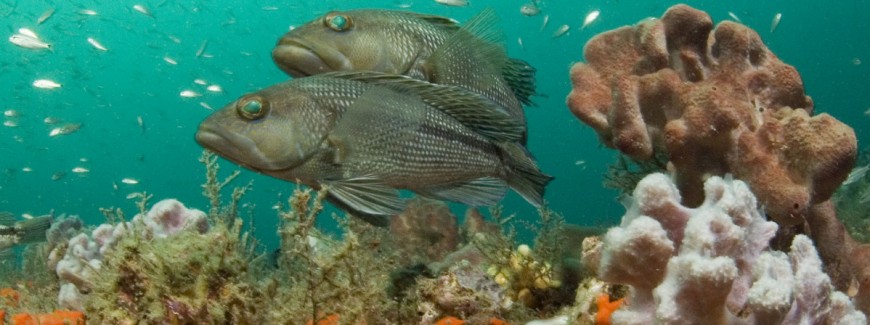
Top photo: Black sea bass (seen here on Gray’s Reef off Georgia) are one of the many species that depend on the Oculina Reef
Pop quiz: What is the name of Jimmy Buffett’s band?
If you guessed the Coral Reefer Band, you were right. Notwithstanding the not so subtle reference to non-marine substances, the coral reference is very apropos for the bard of Key West Florida.
One of those treasured Florida coral formations, Oculina Reef, needs the support of not only Parrot Heads, but all of us. Protection of these rare deep-sea coral formations began in 1984 when the southern portion was designated as the first deep-sea coral protected area in the world, known as the Oculina Habitat Area of Particular Concern (OHAPC).
In the past five years, the South Atlantic Fishery Management Council has considered proposals to open the area next to the coral reefs to destructive bottom trawling. The most recent attempt, Coral Amendment 11 and Shrimp Amendment 12, would allow shrimp trawls within the northern portion of Oculina HAPC. NOAA Fisheries is currently reviewing Coral Amendment 11 and Shrimp Amendment 12.
When coral habitat is destroyed, the countless fish and marine species that depend on it disappear. Once these fragile reefs are damaged, it may be centuries before they recover, if they recover at all.
A coalition of local and national organizations have been fighting against these and similar proposals since 2021. Today they need help to fight off new threats.
You can help by commenting today.
The Florida Oceanographic Society has put together some excellent information about the Oculina Reef and the threats it faces. Here’s the Florida Oceanographic Society take action page.
You can also comment directly to NOAA Fisheries.
The comment period ends on November 17, 2026.
To learn more, we’ve provided additional background information about the Oculina Reef from the Florida Oceanographic Society:
What’s at stake
The Oculina Reef was designated as a Habitat Area of Particular Concern (HAPC) to help protect this sensitive ecosystem from destructive fishing practices. Conservation measures have helped but ongoing advocacy, enforcement, research, and public awareness remain critical.
The health of Oculina Reef impacts broader ocean systems. From supporting fisheries to sustaining biodiversity, deep-sea coral habitats are connected to the health of coastal waters. By learning about hidden ecosystems like the Oculina Reef, we can better understand why ocean conservation matters both offshore and along our coasts.
What is the Oculina Reef?
The Oculina Reef is formed by a slow-growing coral species called ivory tree coral (Oculina varicosa). These corals create complex branching structures that rise from the seafloor like underwater forests.
Stretching along Florida’s Atlantic coast from around Fort Pierce to Daytona Beach, the reef exists at depths ranging from approximately 230 to 330 feet. This habitat is globally rare because Oculina varicosa is one of the only known coral species capable of building extensive reef structures in deep, low-light environments.
The reef provides critical habitat for marine life including:
- Grouper
- Snapper
- Sea bass
- Crustaceans
- Sharks
- Invertebrates
Many commercially and recreationally important fish species rely on the reef during key parts of their life cycles.
Why the Oculina Reef matters
Healthy coral ecosystems are essential to ocean biodiversity, and the Oculina Reef plays an especially important role in Florida’s offshore environment.
A marine nursery
The reef acts as a nursery habitat for juvenile fish and invertebrates. The intricate coral branches provide protection from predators and create feeding opportunities that help young marine life survive.
Biodiversity hotspot
Deep-water coral ecosystems support an incredible variety of species. Scientists continue discovering new organisms associated with the Oculina Reef, demonstrating how much remains unknown about Florida’s offshore habitats.
Fisheries support
Many fish species associated with the reef are economically important to Florida’s recreational and commercial fishing industries. Healthy reef ecosystems help support sustainable fisheries and long-term ocean health.
Scientific importance
Because deep-water coral reefs are difficult to study, the Oculina Reef provides researchers with valuable insight into marine biodiversity, climate impacts, and deep-sea ecology.
Threats facing the Oculina reef
Despite federal protections, the Oculina Reef remains vulnerable.
Bottom trawling
One of the most destructive threats has historically been bottom trawling — a fishing method that drags heavy nets and gear across the seafloor. Deep-sea corals grow extremely slowly, and physical damage from trawling can destroy reef structures that took centuries to form. Scientists have documented extensive damage to portions of the reef caused by these practices.
Climate change & ocean warming
Rising ocean temperatures and changing ocean chemistry threaten coral ecosystems worldwide. As oceans absorb more carbon dioxide, seawater becomes more acidic, making it harder for corals to build and maintain their skeletons. Even deep-water coral systems like the Oculina Reef are not immune to these impacts.
Habitat disturbance
Anchoring, fishing gear impacts, marine debris, and offshore development activities can also damage fragile deep-sea habitats. Because these ecosystems exist out of sight beneath the ocean surface, threats often go unnoticed by the public.
You can find loads more information below:
- Conservation Alliance of St. Lucie County
- Indian River Keeper
- Scientist sign-on letter explaining scientific basis for NOAA to save the Oculina Reef
- WPTV5 story and reporter post on saving the Oculina Reef
- Smithsonian Marine Station YouTube: Florida’s Deep-Water Oculina Coral Reefs: A National Treasure in Peril by John Reed, Harbor Branch Oceanographic Institute