
April 1976 found me at the College of the Holy Cross in Worcester, Massachusetts, finishing up my senior year. I was wandering around campus, drinking too much beer, sleeping too late and, when time allowed, prepping for final exams. It was warm, at least for spring in central New England, so I often wore my new T-shirt, the one with the “BACK THE 200-MILE LIMIT” logo that I had purchased from a group called the National Coalition for Marine Conservation (now Wild Oceans) not long before.
Extending what we now call the Exclusive Economic Zone out to 200 miles was a big deal in those days, when the United States only claimed the waters 12 miles from shore and big, completely unregulated factory trawlers from multiple nations, the majority from the Soviet Union and other Soviet bloc countries, were doing their best to scrape every bit of life off the continental shelf, process it on board, and send it back to wherever the boats had come from.
What we now know as the Magnuson-Stevens Fishery Conservation and Management Act was then just the Fishery Conservation and Management Act of 1976 (1976 legislation). It would push the foreign boats farther offshore, and was also intended to modernize and otherwise rehabilitate the domestic commercial fishing fleet, so that it could be more competitive with the fleets of other nations.
Conservation was not yet a priority.
Charles Witek
Although the legislation addressed conservation concerns, it did not even define the terms “overfishing” or “overfished,” and contained no provision that required the rebuilding of overfished stocks. However, it did include the now-infamous definition of “optimum yield,” which stated that “The term ‘optimum,’ with respect to yield from a fishery, means the amount of fish (A) which will provide the greatest overall benefit to the Nation, with particular reference to food production and recreational opportunities; and (B) which is proscribed as such on the basis of the maximum sustainable yield from such fishery, as modified by any relevant economic, social, or ecological factor. [emphasis added, formatting omitted]”
Regional fishery management councils regularly used that definition to justify landings that exceeded maximum sustainable yield (MSY), effectively “modifying” optimum yield upward so that the commercial fishing industry enjoyed greater earnings, which the councils deemed a “relevant economic…factor.”
Yet, even though the 1976 legislation was very industry-friendly, it ran into substantial opposition. The United States Navy was opposed to the 200-mile limit on freedom of navigation grounds; when I spoke to a Navy ROTC instructor at Holy Cross, who was the closest thing to an official spokesman that I knew at the time, he said that instead of keeping foreign fishing vessels 200 miles offshore, the United States fishing fleet should develop the sort of big fishing trawlers that could cross oceans and fish off other nations’ shores, the same way that the foreign boats were fishing off ours.
The fact that the fish in those foreign waters were, for the most part, already depleted, which is why their boats came all the way over here, was something that the Navy apparently never considered.
The big Pacific tuna harvesters also opposed the 1976 legislation, at least at first. Some South American nations had already declared 200-mile exclusive economic zones, closing their waters to the U.S. purse seiners who wanted to fish there; a number of United States vessels had been taken into custody when they failed to respect the closure. The tuna industry believed that, if the United States established its own 200-mile closure, it would validate the actions of the South American states, to the detriment of U.S. companies.
As a result of that resistance, the 1976 legislation was amended to provide that “The term ‘highly migratory species’ means species of tuna which, in the course of their life cycle, spawn and migrate over great distances in waters of the ocean,” and to declare that “The exclusive fishery management authority of the United States shall not include, nor shall it be construed to extend to, highly migratory species of fish.”
With those changes, the tuna industry ceased its lobbying against the 1976 legislation, and the bill that would eventually be named the Magnuson-Stevens Fishery Conservation and Management Act became law.
As a 21-year-old fish nerd, I was excited by the bill’s passage, but my excitement was premature. Although the 1976 legislation established the eight regional fishery management councils and provided low-interest funding for fishermen seeking to purchase new vessels, it had little immediate impact on the health of fish stocks. Overfishing continued in many of the most important fisheries, and many stocks continued to decline in abundance.
I had hoped that, with the passage of the 1976 legislation, the cod that I caught from Rhode Island party boats would rebound from the lows that we blamed on the foreign trawlers, and that inshore species such as summer flounder, scup, and black sea bass would become more available to anglers.
That didn’t happen. Instead, the cod continued to decline; in 1991, I took a three-day trip on a Montauk, New York party boat, that sailed 13 hours before stopping to fish on New England’s famed Georges Bank, and ended up bringing home fewer cod than I did 15 years before, fishing on day boats out of Galilee, Rhode Island. By 1989, haddock stocks were at record low levels, Atlantic pollock were in decline, and a stock assessment performed in that year found that summer flounder were so badly overfished that few individuals were more than two years old.
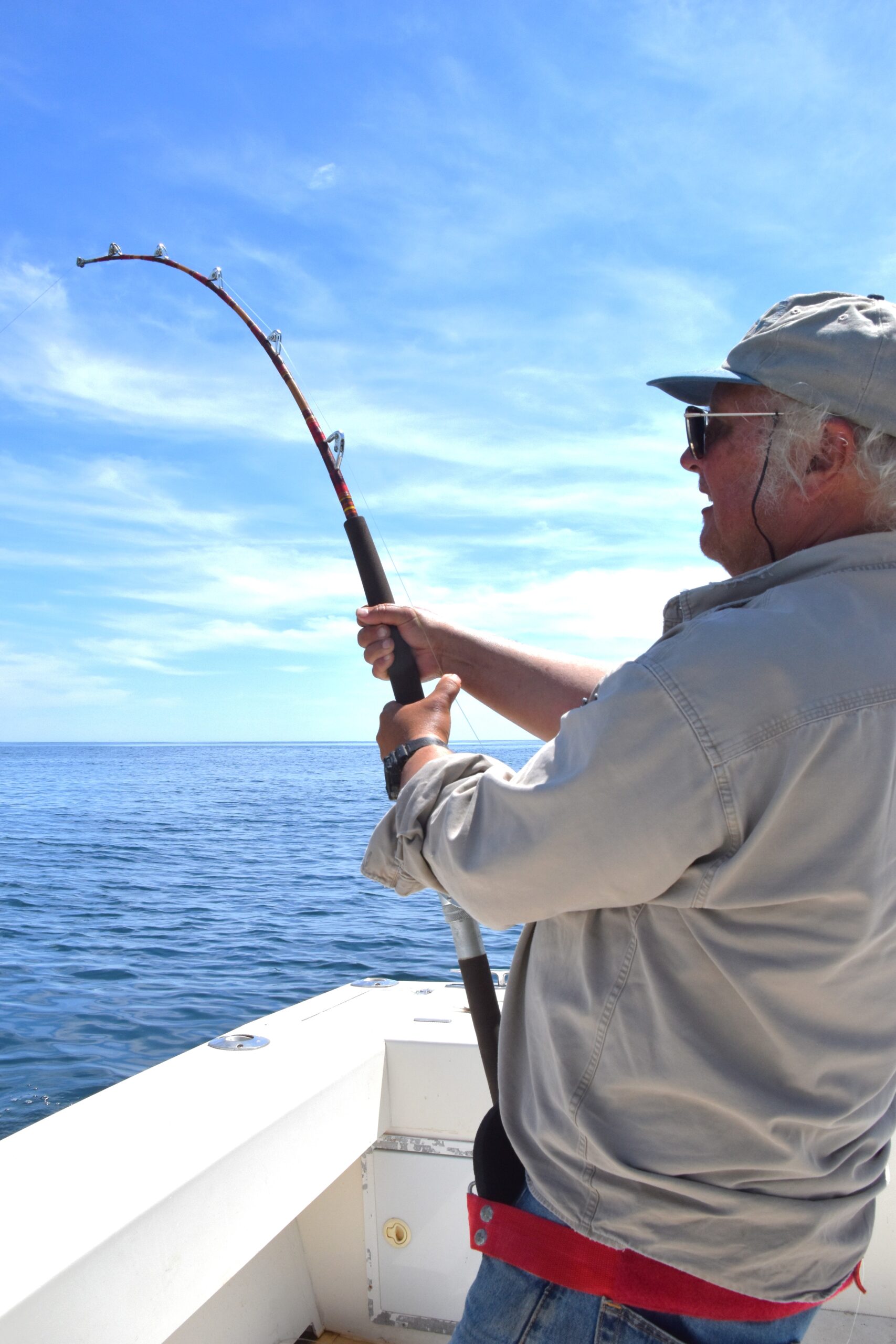
Fishing for so many species had gotten so bad that, during much of the season, unless the weather was good enough to let me run my 25-foot outboard offshore for sharks, white marlin, or tuna, I often didn’t bother running the boat at all.
But things were about to change.
All along the coast, both recreational and commercial fishermen grew ever more concerned with the number of declining fish stocks. Eventually, Congress responded with the Sustainable Fisheries Act of 1996 (SFA) which, for the first time, created legally enforceable requirements that overfished stocks be rebuilt within a time certain—in most cases, in no more than ten years—and that overfishing be prevented; regional fishery management councils were no longer allowed to set optimum yield higher than MSY.
At first, the regional fishery management councils didn’t really take SFA’s new requirements seriously, and continued to do business as usual. But in 1999, after the Mid-Atlantic Fishery Management Council set a summer flounder quota that had only an 18% chance of preventing overfishing, the Natural Resources Defense Council sued. The resulting Court of Appeals decision in Natural Resources Defense Council v. Daley, which was handed down in 2000, changed the course of federal fisheries management. The court found that fisheries management measures had to have at least a 50% probability of preventing overfishing, and that managers must give conservation first priority when choosing among different management alternatives.
That court decision had an immediate impact on federal fisheries management. With conservation the first priority, and 10-year rebuilding deadlines for most species in place, stocks began to recover. Since 2000, 52 once-overfished stocks have been completely rebuilt. In the waters I fished off New York’s Long Island, summer flounder were once again abundant, with many four- and five-year-old fish being taken by anglers.
Still, some of the regional fishery management councils were finding creative ways to sidestep Magnuson-Stevens’ requirements. The New England Fishery Management Council was particularly adept at evading the spirit, if not the letter, of the law. Eschewing hard-poundage quotas that might have had a chance to restore dwindling cod and flounder stocks, the New England Council tried various input controls, such as limiting a commercial vessel’s days at sea, without imposing annual catch limits on the fleet. The measures looked good on paper, where they supposedly demonstrated a 50% probability of success, but in the real world, they allowed overfishing to continue each year. Stocks of cod, flounder, and other groundfish continued to dwindle.
In response, Congress passed the Magnuson-Stevens Fishery Conservation and Management Reauthorization Act of 2006 (2006 Reauthorization), which contained new language requiring that regional fishery management councils “develop annual catch limits for each of its managed fisheries that may not exceed the fishing level recommendations of its scientific and statistical committee…” Furthermore, every fishery management plan was required to “establish a mechanism for specifying annual catch limits in the plan (including a multiyear plan), implementing regulations, or annual specifications, at a level such that overfishing does not occur in the fishery, including measures to ensure accountability.”
The requirement for science-based, hard-poundage catch limits ended most efforts to evade Magnuson-Stevens’ conservation provisions, and some stocks, such as black sea bass north of Cape Hatteras and red snapper in the Gulf of Mexico, quickly began to increase in abundance.
But there was also a backlash to the 2006 Reauthorization, driven by the recreational fishing industry.
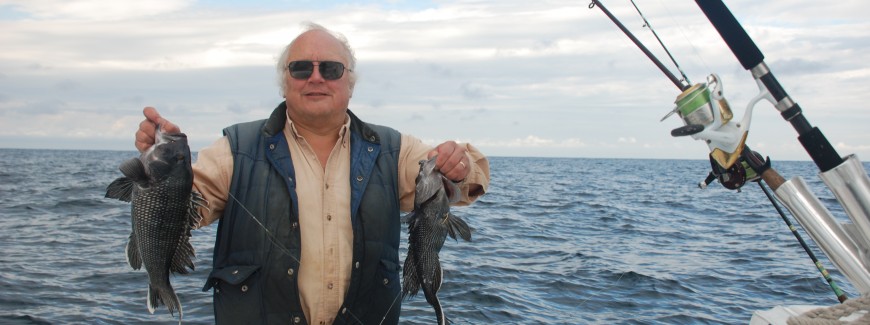
That happened because abundance tends to drive recreational fishing effort. As fish become more abundant, they also become easier for anglers to catch, and so more anglers begin to pursue them. The combination of more anglers, more recreational trips, and increasing abundance caused anglers’ landings to spike. I was no exception to that general rule; as larger black sea bass, some approaching four pounds in weight, became more common in the ocean off Long Island, I found myself spending more time fishing for them on local wrecks, and regularly filling my coolers with limits of fish.
Because of that increased angler activity, overfishing regularly occurred, accountability measures were invoked, and recreational management measures became more restrictive. Anglers, seeing fish increasing in abundance, couldn’t understand why more restrictive measures were needed, while the angling industry, seeking to sell more tackle, more boats, and more trips on for-hire vessels, began attacking the federal fishery management process and encouraging recreational fishermen to do the same.
Arguing that hard-poundage annual catch limits and strict rebuilding deadlines aren’t an appropriate means to regulate the recreational sector, the industry successfully advocated for the Modernizing Recreational Fishery Management Act of 2017 (Modern Fish Act), which provided a supposedly viable pathway for evading such measures with language that authorized the regional fishery management councils “to use fishery management measures in a recreational fishery (or the recreational component of a mixed-use fishery) in developing a fishery management plan, plan amendment, or proposed regulation, such as extraction rates, fishing mortality targets, harvest control rules, or traditional or cultural practices of native communities in such fishery or fishery component.”
While a separate title of the law made it clear that nothing in the Modern Fish Act was intended to modify the conservation provisions of Magnuson-Stevens, the new legislation allowed the regional fishery management councils to push the limits of existing law when adopting recreational management measures.
The first real test came in 2023, after the Mid-Atlantic Fishery Management Council adopted the so-called Recreational Harvest Control Rule Framework (framework), which allowed managers to, under specified circumstances, establish recreational landing limits that exceeded both the recreational harvest limit and the annual catch limit in the bluefish, summer flounder, scup, and black sea bass fisheries.
The original impetus for the framework was an extremely abundant black sea bass stock, which a 2016 stock assessment found to be 240% of its target level, and incessant angling industry criticism of federal black sea bass management. Such criticism had already cowed fishery managers, who didn’t want to have to explain more restrictive fisheries management to aggressive, objecting stakeholders, even when it was clear that recreational landings were chronically exceeding the sector’s annual catch limit. Even before the framework was adopted, I noted that excessive harvest was impacting the black sea bass population; during the early 2010s, I was catching a few fish that weighed between 3 ½ and 4 pounds on every trip; by the end of that decade, even 3-pound fish were few and far between on the wrecks that I fished off Long Island.
Thus, I was more than willing to ally with the plaintiffs in Natural Resources Defense Council v. Raimondo, a lawsuit that challenged the framework on the grounds that it would set recreational landings limits for black sea bass (as well as bluefish, summer flounder, and scup) high enough to exceed the annual catch limit and, at times, even the overfishing limit, provided the spawning stock biomass was at a high enough level of abundance. Unfortunately, the court issued an unexpected decision, finding that the annual catch limit required by Magnuson-Stevens wasn’t really a limit on harvest at all, but merely a level of catch that would trigger accountability measures, and that overfishing was something to be gauged over the long term; management measures that would cause the overfishing limit to be exceeded in any one year were not necessarily taboo, so long as that level of harvest didn’t impair the stock’s ability to produce MSY.
With that, the foundation of Magnuson-Stevens suffered a small crack.
Down in the Gulf of Mexico, the Gulf Fisheries Management Council, at the urging of the recreational fishing industry and allied anglers’ rights organizations, adopted Amendment 50 to the Fishery Management Plan for the Reef Fish Resources of the Gulf of Mexico (Amendment 50), which allows the states to set their own fishing seasons and, within specified limits, their own size and bag limits for red snapper, so long as the aggregate recreational landings did not exceed the annual recreational catch limit. Each state tracks recreational landings with its own data collection system, rather than using the same system used by the other states and by federal fisheries managers.
Under Amendment 50, recreational season lengths increased, and so did recreational red snapper landings, at least for a while. But now, party and charter boat captains are complaining that the seasons are too long, that they are now having to run farther and fish longer to catch a limit of fish, and that the size of the fish that they’re catching, particularly closer to shore, is shrinking noticeably.
The foundation of Magnuson-Stevens has cracked a little more.
Emboldened by its success with Amendment 50, the same coalition of angling industry and anglers’ rights organizations attacked federal management of red snapper off the South Atlantic states. Most of the red snapper fishing mortality in that region is caused by fish that die after being released by anglers when the red snapper season is closed. The extremely high level of release mortality forced the National Marine Fisheries Service (NMFS) to impose a very short 2-day season on the recreational sector in 2025. Even so, recreational effort was intense enough that anglers modestly overfished their 22,797-fish annual catch limit. In response, as they did in the Gulf of Mexico, the angling industry argued that states could manage the recreational red snapper fishery better than NMFS.
On May 1, NMFS issued exempted fishing permits granting the states management authority over South Atlantic red snapper. But unlike the exempted fishing permits that initiated the Amendment 50 process, those issued for South Atlantic red snapper did not limit recreational harvest to the annual catch limit, but rather exempted recreational red snapper fishermen from Magnuson-Stevens’ annual catch limit requirement. Last year’s two-day recreational red snapper season was replaced with a 39-day season off Florida and a 62-day season off North Carolina, South Carolina, and Georgia. One large marine conservation organization predicted that those longer seasons could lead to a 2,000% increase in recreational red snapper landings.
A group of commercial fishermen are challenging the exempted fishing permits in the Federal District Court for the District of Columbia, the same federal court that upheld the framework. Three conservation groups, The Ocean Conservancy, Earthjustice, and the Environmental Defense Fund, have intervened in the action on behalf of the plaintiffs, while two angling industry/anglers’ rights groups, the American Sportfishing Association and the Coastal Conservation Association, have intervened in support of the exempted fishing permits.
The plaintiffs’ arguments were compelling enough that, on May 21, 2026, the trial court issued a preliminary injunction halting any fishing activities under the exempted fishing permits. That is good news, because a preliminary injunction is normally not issued unless a judge believes that the plaintiffs are likely to prevail once the merits of the case are argued, and because the outcome of the lawsuit may well foretell the future of Magnuson-Stevens.
Should the plaintiffs prevail, there is a good chance that the erosion of Magnuson-Stevens’ conservation standards can be controlled, if not halted, and that the law will still provide substantial and meaningful long-term protection for the United States’ fish stocks. However, should the issuance of the exempted fishing permits be upheld, the cracks already besetting the foundations of Magnuson-Stevens will only widen, perhaps to the point that its conservation mandates will, indeed, come crashing down.