
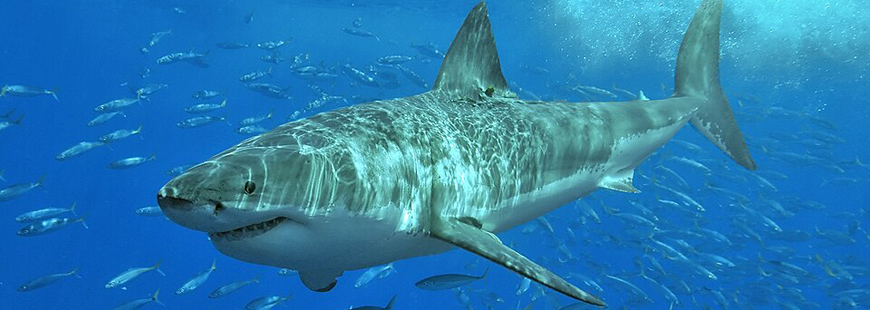
Top photo via Wikipedia
I was 13 years old and excited, because I was finally allowed to join my father and two of his friends on a party boat trip, targeting cod on Rhode Island’s Cox’s Ledge.
I had fished for cod before, from other party boats, but they were either half-day trips or trips aboard “tourist boats” that left from resort towns and fished in protected waters. This was my first full-day trip out into the open Atlantic, on a somewhat scruffy boat carrying a load of serious-looking fishermen, a trip with “the guys” and not just with the family.
It was a 2 ½-hour trip to the ledge, 2 ½ hours of growing anticipation, and I wasn’t disappointed. As soon as we arrived at the captain’s chosen spot, and the boat came tight on its anchor, I dropped my bait to the bottom and was immediately rewarded with the thumping bites of a cod. Everyone on board enjoyed a steady bite of mostly small fish, until one fisherman in the stern corner quietly leaned into his bent-over rod and began bringing what was obviously a bigger fish toward the surface.
I stared down into the clear ocean water, and eventually the flickering green silhouette of a fish began to materialize, becoming clearer and better defined as it neared the boat. But then, out of nowhere, a much larger silhouette also appeared, circled the cod once or twice, and just as some of those standing around me said the word, “Shark,” turned toward the fish and bit through its body just behind the head. The disappointed angler began reeling harder, hoping to at least get a few steaks out of what remained of his fish, but just as he began to lift the head out of the water, the shark returned, cobalt blue back out of the water, less than two feet from my shoes as it raced across the boat’s stern, grabbed what remained of the cod, snapped the fisherman’s line, and returned to the depths.
I didn’t know it, but I became an offshore fisherman in that moment, so enthralled by the shark’s beauty and power that I promised myself I would catch one someday, a promise that I kept some years later on a trip that led to a lifetime of chasing sharks, tuna, and occasional billfish off the coasts of New York and New England.
I kept codfishing, too, and like everyone who codfished back then, lost the occasional fish to an opportunistic shark, although it never particularly bothered me. It was all a part of the game.
But these days, it seems that people are a lot less tolerant, and “depredation,” particularly shark depredation, has become a hot issue.
In late 2024, the University of Massachusetts at Amherst conducted an extensive survey of anglers between North Carolina and Maine, seeking information on their experiences with depredation. The study intended “to gather data on how often recreational anglers experience sharks, seals, birds, or other gamefish snatching their catch.”
I was happy to see that the survey wasn’t focusing solely on sharks, because I’ve probably experienced more depredation events from bluefish stealing scup and black sea bass from me while fishing on offshore wrecks than I have from sharks, bottlenose dolphin, or any other animal.
Evan Prasky, the graduate student conducting the survey, acknowledged the wide range of depredating species in a comment he made in the Miami Herald, which was quoted on the University website: “Unfortunately, the face of depredation is sharks. However, we are also exploring how common it is to see seals, dolphins, birds, and other fish are depredating. It could be any predator, any fish that is bigger than the fish you have…if you are fishing and a 10-to-15-foot shark is eating your bait near the boat, it’s like watching a lion eat a zebra. The sharks will slap the side of the boat and fight for it. It’s the greatest show in nature.”
However, fishermen, particularly in the South Atlantic and Gulf of Mexico, are less enamored of the “show,” and more interested in getting fish to the boat in one piece. In those waters, the primary depredators are sharks, dolphin, and goliath grouper, all of which enjoy some sort of federal and/or state protection, and all of which draw hostile reactions from many anglers.
More rational anglers are pushing for passage of H.R. 207, the so-called “SHARKED Act,” which was sponsored by Rep. Robert J. Wittman (R-VA). That bill, which has passed the House of Representatives but has not yet been taken up by the Senate, calls for the Secretary of Commerce to establish a task force, composed of one representative from each regional fishery management council, one representative from each regional marine fisheries commission, one representative of a state fish and wildlife agency from each of the regional fishery management councils, one representative from the National Marine Fisheries Service, one individual with expertise in the management of highly migratory species, one researcher with expertise in shark management and behavior, and one researcher with expertise in shark ecology.
The task force with be charged with finding ways to improve coordination and communication among fisheries managers and shark researchers with respect to shark depredation, identify research priorities related to shark depredation, recommend management strategies to address shark depredation, and help develop and distribute educational materials that will help fishermen minimize depredation incidents “including through changed angler behavior and expectations.”
As written, H.R. 207 seems a reasonable approach to the shark depredation issue, although there are always concerns about what steps might be taken after the task force concludes its work, submits its report, and some level of shark depredation continues.
Unfortunately, less rational anglers are already attempting to address depredation through violent and often illegal actions.
In May 2025, a Florida charter boat captain was sentenced to 30 days in prison, and had to pay a $51,000 fine, after being convicted of shooting and poisoning dolphin (of the mammal kind) in the Gulf of Mexico. According to a press release issued by the United States Attorney’s Office for the Northern District of Florida,
In the summer of 2022, [Zackary Brandon] Barfield grew frustrated with dolphins eating red snapper from the lines of his charter fishing clients. He began placing methomyl inside baitfish to poison the dolphin that surfaced near his boat. Methomyl is a highly toxic pesticide that acts on the nervous system of humans, mammals, and other animals, and is restricted by the Environmental Protection Agency…to control flies in non-residential settings. Barfield recognized methomyl’s toxicity and impact on the environment but continued to feed poisoned baitfish to the dolphins for months.
While captaining fishing trips in December 2022 and the summer of 2023, Barfield saw dolphins eating snapper from his client’s fishing lines. On both occasions, he used a 12 gauge shotgun to shoot the dolphins that surfaced near his vessel, killing one immediately. On other occasions, Barfield shot, but did not immediately kill, dolphins near his vessel. On one occasion he shot a dolphin while two elementary-aged children were on board, and another with more than a dozen fishermen on board.
While that individual was apprehended and punished for his actions, one can only wonder how many similar acts are committed by captains and private boat anglers, unwitnessed, on the open sea. However, given the hostility expressed by anglers, directed mostly at sharks and, to a lesser extent at goliath grouper, there’s probably more of it going on than we think.
For example, comments to one Facebook post on a page created by a group calling itself the “Offshore Fishing Club” say things like, “Every time a shark makes it to my boat, it dies. It’s the darnedest thing!” “yes, its funny, when one comes to my boat they float down to the bottom with a headache…” “Use the Tripple S method. Shoot. Sink. Shutup.” And “Hawaiians were known to hook three baits on a wire leader and a three-way swivel and let sharks battle one another to whatever outcome. This keeps them occupied when you’re fishing and they can sort out their own needs.”
The latter comment received 128 “likes,” with the first response being, “damn that’s genius,” so many anglers’ hostility to sharks, and their willingness to kill apex marine predators, even when those fish are legally protected from recreational harvest, is impossible to deny.
Another Facebook page, from a group calling itself “KILLSHOT Life,” recently asked the question “So what do we do about Florida’s goliath grouper problem?” While the comments were far more temperate than those made on the Offshore Fishing Club page with respect to sharks, with most respondents merely seeking open seasons and higher landings, there were nonetheless a share of people who merely wrote, “Fillet and release,” while others said things like “Just switch to a powerhead and let the reef Take them back,” and “I been killing everyone I catch for 20 yrs ! They are destroying the quality fish around Florida and offshore ! But everyone trusts the ignorance of the government…”
The National Marine Fisheries Service prohibits goliath grouper harvest, and the species is very tightly regulated in Florida, but it appears that some anglers are nonetheless killing them because of depredation.
While that sort of action is impossible to justify, just about every recreational fisherman would like to avoid, or at least minimize, depredation events. In Florida, many anglers believe that dive boat operators who feed sharks, in order to bring them close to skindivers, are part of the problem, claiming that they teach sharks to associate boats with food.
The American Sportfishing Association, the fishing tackle industry’s largest trade association, has claimed, “Often employed by divers, shark feeding can condition sharks to associate humans and boats with food, and the practice has likely led to an increase in shark depredation, when a shark eats a hooked fish before an angler can successfully land it, in the South Atlantic and Gulf as well. ASA supports a shark feeding ban as part of its approach to address shark depredation.”
In response to such concerns, Rep. Daniel Webster (R-FL) introduced H.R. 3831, the Florida Safe Seas Act, which would prohibit shark feeding in federal waters off the coast of Florida (Florida already prohibits shark feeding within state waters). The bill has been passed by the House of Representatives, but as is the case with the SHARKED Act, the Senate has yet to take any action.
The bill is strongly opposed by shark diving operations, which argue that scientists have never established a clear link between shark diving and shark depredation.
A recent paper, published in the April 26, 2026 edition of the ICES Journal of Marine Science suggests that shark depredation may be a natural response to increasing populations of sharks, fish, and recreational fishermen. Titled “Characterizing a century of shark depredation in US Atlantic recreational fisheries,” (characterization paper) the paper breaks the last century down into twenty five-year eras, each marked by different levels of sharks, fish, and recreational fishing activity, and argues that “At its essence, shark depredation is the result of human-wildlife overlap: in this case, spatially and temporally dynamic overlap between recreational anglers and sharks competing for a shared resource. Navigating the challenges associated with recent increases in shark depredation (real or perceived) requires a broader understanding of how this overlap has evolved over time.”
The characterization paper’s authors begin by describing the first quarter-century, 1925 to 1950, noting that “In the early 1930s, Ernest Hemingway documented some of the earliest instances of depredation by sharks.” Then, after the onset of the Second World War interrupted cod liver oil deliveries to the United States from Europe, a domestic shark fishery emerged to produce a substitute vitamin source. The authors summarize the period as “a reasonable representation of the initial overlap between anglers, fisheries, and sharks in a relatively untouched ecosystem,” when sharks and a relatively small number of anglers both had significant interactions with abundant fish stocks, but a relatively low rate of interactions with each other.
Between 1951 and 1975, the end of the war saw the domestic shark fishery decline to insignificance, while commercial landings of various finfish species increased, as did the number of recreational fishermen, who benefitted from more leisure time and more available and more affordable fishing boats. The growing recreational fishery included a flourishing shark fishery, which grew even larger after the publication of Peter Benchley’s novel, Jaws, inspired more anglers to seek what the book portrayed as a dangerous ocean predator. With shark populations still relatively high, target fish populations declining, and more anglers on the water, there was probably more competition between anglers and sharks for the remaining fish, and an increase in shark depredation.
The years between 1976 and 2000 saw two trends from the previous 25-year period, an increase in recreational fishermen and a decrease in the fish that they targeted, continue. In addition, thanks to the passage of the Magnuson-Stevens Fisheries Conservation and Management Act, which included provisions designed to support and grow the domestic commercial fishing industry, commercial fishermen were encouraged to develop fisheries for “underutilized” sharks; at the same time that recreational shark fishing grew in popularity. Chinese markets opened up to shark fins caught by American fishermen, and commercial shark landings grew from 135 tons in 1979 to 7,172 tons in 1989. Both the recreational and commercial shark fisheries were completely unregulated until 1993, when the first fishery management plan for Atlantic sharks was adopted. By then, a number of shark species were already overfished, and the public began to become aware of the need for shark conservation.
That period, with its relatively low numbers of sharks and depleted stocks of targeted sportfish, resulted in relatively few interactions between recreational fishermen and sharks. It was the time when many of today’s anglers entered the sport, and a majority of those anglers view the relatively low level of shark depredation that occurred in those years, as well as the relatively low shark population, as “normal,” even though, when viewed in a historical context, the number of sharks and the number of depredation events were actually unusually low.
The latest 25-year period, 2001 through 2025, saw successful fisheries management efforts increase the abundance of both sharks and many species of fish targeted by anglers, while the number of recreational fishermen also continued to rise. The characterization paper notes that, as a result of such increasing abundance of sharks, targeted fish species, and anglers, “overlap between these three groups is likely at an all-time high.”
As biologist Marcus Drymun and his co-authors noted in “Depredation: An old conflict with the sea,” published in the journal Fish and Fisheries, “it is important to recognize lifting baselines; that is, instances where previously depleted populations are recovering after decades of decline. For example, [one research team] attributed increases in population trajectory for several US shark species to the successful implementation of science-based management measures. It is vital that these success stories are celebrated.”
However, many anglers are not celebrating the restoration of shark populations. Instead, as the characterization paper observes, “a growing body of recreational anglers were expressing concerns that proliferating shark populations were causing increases in depredation. Collectively, these anglers were vocalizing a shift in attitude from ‘sharks threaten our safety’ in the 1980s to ‘sharks threaten our recreational fishing opportunities.’ This led recreational anglers to associate rising depredation with management measures that protect sharks.”
That association has led to the increasing pressure coming from the recreational community to relax shark management measures, along with the increasing number of anglers who are willing to kill sharks, in violation of existing management measures, in a futile effort to stem the number of depredation incidents.
Yet, while anglers continue to blame the sharks, they should also be blaming themselves, for as the characterization paper argues, the increasing levels of depredation are caused not only by increasing numbers of sharks, but also by increasing numbers of anglers, which lead to increasing numbers of shark/angler interactions. Yet many recreational fishermen, like many in the recreational fishing industry, focus only on reducing the number of sharks, while seeing no problem with the number of anglers continuing to grow.
Depredation by many different species, be they sharks, grouper, dolphin, seals, or anything else, is a growing problem, and seems to be the inevitable result of a growing number of anglers venturing out on the water and competing with the ocean’s native predators for the same target species.
Anglers, perhaps naturally, see themselves as the victims of such competition.
The depredation problem can’t be ethically addressed by depleting the number of ocean predators, just so anglers can enjoy their sport. But it can be solved once the angling public understands that they share the sea with sharks, seals, dolphin, and other native predators, and that so long as they compete for the same target species, anglers are going to have to share a portion of their catch, as well.