
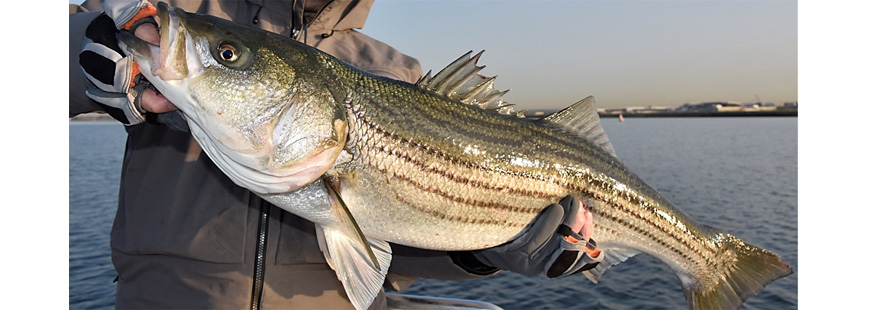
Top photo by John McMurray
Legislation introduced into the House of Representatives on October 8, 2025 represents a real threat to the federal recreational fisheries data collection process, and to how that data will be used in the management process.
H.R. 5699, the so-called “Fisheries Data Modernization and Accuracy Act of 2025,” was introduced by Rep. John Rutherford (R-FL), who characterized it as “A BILL To require the Administrator of the National Oceanic and Atmospheric Administration to reform the Marine Recreational Information Program of the National Marine Fisheries Service, and for other purposes.”
While that goal might sound laudatory, in practice, the bill would turn recreational data collection on the Atlantic and Gulf coasts into a patchwork of state and federal programs which utilize different methodologies, the results of which would not be directly comparable with one another unless and until the outputs of the various programs were calibrated to report findings in a “common currency” which accounts for how differences in methodology affect the data produced by each state.
That issue arose in the Gulf of Mexico, after Amendments 50A-50E to the Fishery Management Plan for Reef Fish Resources in the Gulf of Mexico (Amendment 50) assigned recreational red snapper quotas to each of the states bordering the Gulf of Mexico, granted those states a limited ability to craft regulations intended to keep anglers within each state’s quota, and allowed those states to develop their own programs to supplement MRIP’s recreational red snapper data.
After the state data programs were initiated, the National Marine Fisheries Service (NMFS) found that “each Gulf state manages the harvest by its private anglers using estimates from its own state data collection program. The Federal Marine Recreational Information Program (MRIP) based catch limits for Florida, Alabama, Mississippi, and Louisiana are not directly comparable to the landings estimates generated by each of those states, and the state estimates are not directly comparable to each other.”
In 2023, to correct that problem, NMFS adopted what it called a “Calibration Framework,” that translated the data from each state program into a common currency that allowed them to be used for effective fisheries management. The Calibration Framework “uses the calibration ratios to adjust each state’s [annual catch limit] into the currency in which that state monitors landings. Those rations are: Alabama (0.4875); Florida (1.0602); Louisiana (1.06); Mississippi (0.3840); Texas (1.00). The MRIP-based [annual catch limits] are multiplied by the rations to determine the state currency [annual catch limits].”
While that worked well for three of the states, which were already producing landings data that was nearly comparable with MRIP, it didn’t go over very well in Alabama and Mississippi, where the original state recreational quotas would be slashed by more than half. The American Sportfishing Association, which represents the fishing tackle industry, complained that “the results for [Alabama and Mississippi] are dire: Alabama’s quota would be cut roughly in half and Mississippi’s would decrease by more than 60%…The concept of calibration isn’t necessarily a bad thing, but many have questioned whether the proposed calibration rations are based on the best available science…One thing that is not being questioned is that pushing these ratios forward would have severe negative economic impacts to Alabama and Mississippi.”
On the other hand, the Ocean Conservancy, which advocates for fisheries conservation and effective fisheries management, was pleased that
NOAA Fisheries is finally taking long-overdue action to address the serious design flaws in the Gulf state management system for the private recreational red snapper fishery…For five years, state management has allowed anglers to chronically exceed sustainable fishing limits for red snapper, jeopardizing the health of this fishery that is still rebuilding from historic overfishing. Since day one of the state management system going into place, managers have known they needed to establish a process to bring disparate state and federal data systems together so they could understand how many fish were being caught across the whole Gulf of Mexico. Because each state’s survey is tailored to the needs of each state and its anglers, the estimates they produce are not directly comparable to one another or established sustainable quotas, so the different sources of data must be calibrated.
After a long, bitter, and often divisive debate that pitted NMFS and the marine conservation community against various industry and “anglers’ rights” organizations, a final rule was adopted on May 14, 2024, which adjusted the calibration ratios for Florida, Alabama, and Mississippi. That appears to have put the issue to rest, at least for the foreseeable future.
Now, H.R. 5699 threatens to reignite the debate, not just for Gulf of Mexico red snapper, but potentially for most federally-managed recreational fisheries on the Atlantic and Gulf coasts, and throw the data collection process into chaos.
One of the bill’s biggest problems is that it is attempting to address a handful of local issues by making wholesale changes to the Magnuson-Stevens Fishery Conservation and Management Act (Magnuson-Stevens), which governs fishing in all of the federal waters of the United States.
It has been said that if the only tool you have is a hammer, everything else begins to look like a nail. A fisheries corollary might be that if you’re a legislator dealing with fisheries issues in the southeast, every fish begins to look like a red snapper. There is little doubt that fishermen’s discontent with South Atlantic red snapper regulations, which has been aggravated by various organizations’ intemperate remarks, is the primary motivation behind H.R. 5699.
The bill provides that if the percent standard error (PSE), the criterion used to measure the precision of MRIP estimates, exceeds 30 for any two-month wave in any “seasonal fishery” (defined as any fishery that is either subject to a closed season or subject to accountability measures that might trigger a closure if the annual catch limit is exceeded), and such PSE cannot be reduced, the recreational component of that fishery should be managed with either multi-year annual catch limits or alternative management measures such as “extraction rates, fishing mortality targets, or harvest control rules,” rather than annual catch limits that are reset each year.
Such a provision would directly impact the South Atlantic red snapper fishery, where all of the single-wave PSEs during the years 2020-2024 ranged from 42.7 to 100.9, and thus allow managers to adopt alternative management approaches that are likely to increase recreational landings. Unfortunately, it would also impact fisheries such as Atlantic cod (PSEs of 13.7 to 59.9), mid-Atlantic/New England black sea bass (PSEs of 8.2 to 72.4), summer flounder (PSEs of 9.1 to 75.3), South Atlantic gag grouper (PSEs of 24.0 to 83.7), and most other federally managed species, effectively undercutting Magnuson-Stevens’ requirement that annual catch limits that prevent overfishing be put in place for all managed species.
H.R. 5699 merely states that “If the PSE for data collected through the MRIP program…exceeds 30 percent” the various alternative management approaches would apply. It doesn’t specify whether such provision only applies to MRIP landings data, or only to catch data, or to any other data collected through the MRIP program, nor does it specify whether such provision applies only to data collected at the regional level, or whether it would apply to state-level data as well.
Such vague language opens the door to arguments, from anyone unhappy with the current management of any federal fishery, that alternative management measures were needed because data for a single two-month wave in a single state had a PSE slightly above 30, even if the fishery was performing well and otherwise appeared to be well-managed.
H.R. 5699 would also require NMFS to prepare a report within six months after a single-wave estimate in any federally-managed seasonal fishery had a PSE exceeding 30, setting forth the management options considered; recommending how to reduce the PSE or, in the alternative, “how to adjust the management of such seasonal fishery in a manner that allows continued access and considers” alternatives to hard-poundage annual catch limits; and including the reasoning for the recommendations made, “written in a manner easily understood by the public.”
Given the broad array of federally managed species that would qualify as “seasonal fisheries,” and the likelihood that PSEs for such species might exceed 30 in a single wave, that reporting requirement would pose a significant and unreasonable burden for NMFS personnel.
Even if the PSE of MRIP data is well under 30, suggesting that the data is reasonably precise, the bill would allow states to petition for alternative management measures if the PSE of the MRIP data is “substantially” higher or lower than the three-year average (meaning that if the precision of the data markedly improves, the state could seek the same remedies that would be applied if the quality of the data had deteriorated), was substantially worse than the PSE of state-gathered data (even though not all state programs use PSE as a measure), or MRIP data is deemed unreliable because the species in question is infrequently encountered or is only caught during a very short season.
H.R. 5699 would also allow NMFS to replace MRIP data with data collected with “alternative data collection and monitoring methodologies” if it determined that it is not practicable to bring the PSE in any wave of a seasonal fishery below 30, and does not create any exception for waves that occur when little fishing for a particular species takes place (e.g., summer flounder in Wave 2, March/April, when the PSE in 2024 was 63.5 just because most states’ seasons were closed). That could result in MRIP no longer being used to collect and monitor data in most federally managed fisheries, and might well lead to abandonment of the MRIP program in its entirety.
Abandoning MRIP, and weakening the federal fisheries management system, seem to be two of H.R. 5699’s goals. A section of the bill, titled “State Fishery Catch and Effort Data Collection,” would authorize states to “collect recreational fishing catch and effort data for individual, or sets of, species that are federally managed.”
Provided that the resulting data met standards to be established by NMFS, states would be granted “the flexibility in the design of [data collection] programs to account for differences in recreational fishing activity between states.”
Although such flexibility would inevitably give rise to the same sort of calibration issues that arose when the Gulf states began collecting recreational red snapper data, NMFS was directed to develop and implement a plan to use such state-collected data “as a baseline for the calibration of historic estimates of recreational catch in place of the data collected through the MRIP [emphasis added],” doing so “without calibration to data collected pursuant to any Federal program, including the MRIP.”
H.R. 5699 further directs that NMFS “shall use the data collected by the State in place of the data collected pursuant to the MRIP, including with respect to management decisions,” thus assuming that data from programs that have not yet even been proposed will somehow be superior to that proposed by MRIP. In line with that assumption, the bill would also shift funding previously used to support MRIP in a state to instead fund that state’s own data collection program, and also provide grants to states who wish to create their own data collection programs.
Allowing some states to abandon MRIP in favor of their own data collection programs, while other states opted not to do so, would create a significant calibration problem even in the cases of red snapper and other reef fish, which typically don’t migrate over long distances. However, it would probably create chaos along the New England and mid-Atlantic coasts, where species as diverse as bluefish and black sea bass frequently engage in long seasonal migrations; some bluefish, for example, might regularly engage in seasonal migrations between Maine and North Carolina, or even farther south, in the course of a single year. Trying to manage such wide-ranging species using uncalibrated data from multiple state programs as well as from MRIP would be a practical impossibility.
H.R. 5699 would also reduce the role of federal fisheries scientists by requiring NMFS to “establish a program to enter into contracts with independent entities on a competitive basis under which such independent entities shall conduct fisheries-independent surveys designed to estimate the absolute abundance of stocks of fish included in the Fish Stock Sustainability Index on behalf of” the agency.
The bill provides that, so long as the independently acquired data passes peer review, NMFS “shall incorporate data collected pursuant to a fishery-independent abundance survey conducted by an independent entity…into management decisions.” It thus strips away the ability of NMFS’ in-house scientists to, in the exercise of their professional expertise and discretion, independently determine the validity and value of the independently-developed data. At the same time, H.R. 5699’s insistence on contracting with “independent entities” would almost certainly result in funding being diverted away from NMFS’ regional science centers in order to pay for the independent research, leading to further reductions in NMFS’ scientific staff and weakening the agency’s ability to study and manage marine fish stocks.
H.R. 5699 clearly fits into the continuing pattern of recreational fishing industry organizations and “anglers’ rights” groups, abetted by friendly legislators, seeking to undermine the federal fishery management system in the southeastern United States, in order to increase recreational landings and fishing activity and, in theory, industry profits, at least in the short term.
However, while previous efforts were limited to a handful of species in the southeast, H.R. 5699 would create fundamental changes to Magnuson-Stevens, so has the potential to disrupt federal fisheries management for just about every species on every coast of the United States.